
- BuildPadAI rapid application development for secure, tailored internal tools.
- Chocolate FactoryAgentic AI platform to observe, teach and configure your agents.
- Cloud PrimusOne control plane for AI and cloud, with cost control built in.
- SentryPageIntelligent website defacement monitoring that catches changes fast.
- VisorOne AI-powered CMS for every enterprise website you run.
Production lines: alerts when machines drift
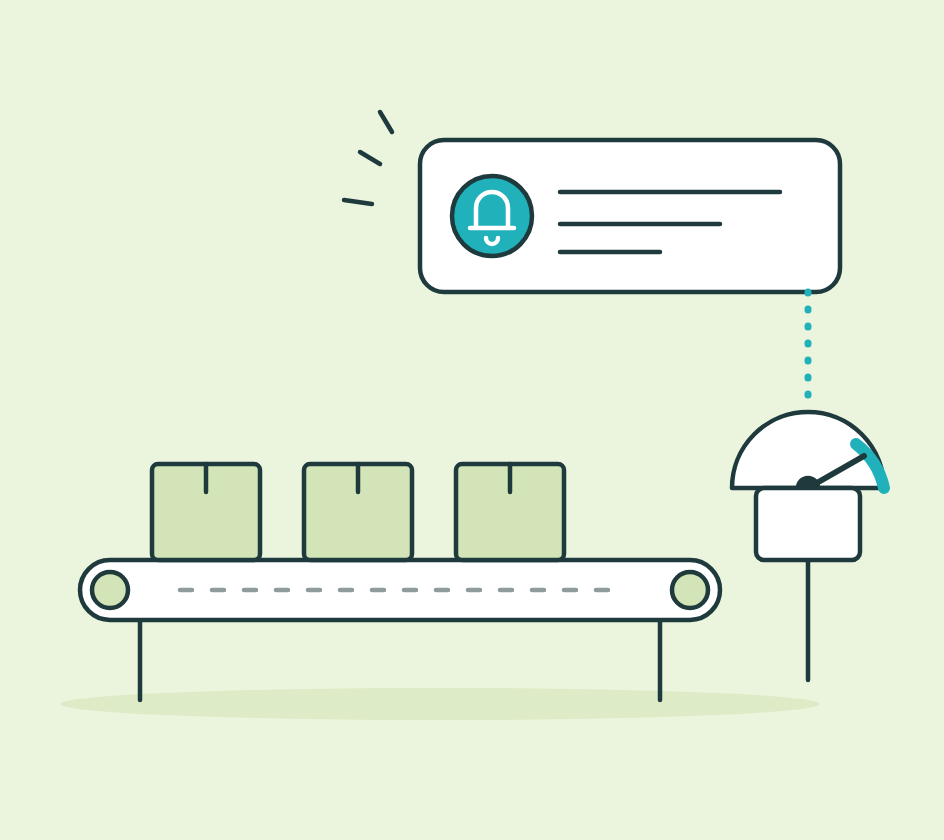
The belt stops on its own, but nobody is told, so the line sits idle until someone walks past
The problem
When a machine drifts out of range, the interlock stops the belt to protect the product and the equipment. That part works. What is missing is that nobody is told. The machine has made the right call and has no way to say so, so detection falls to a supervisor walking past, an operator coming back from another task, or the next stage of the line running dry. At KYB-UMW that gap averaged an hour and a half.
The usual answer
The useful thing about that hour and a half is that none of it is repair time. It is time spent not knowing. Most plants invest in fixing faster while the clock that costs them the most is the one running before anyone is aware there is a fault.
How we approach it
We set thresholds on the readings the machine already produces and push an alert the moment one is crossed. The alert names the machine and the value, so whoever picks it up knows where to go and what they are walking into. Where it goes at three in the morning, and what happens if nobody acknowledges it, is set up with the shift pattern rather than left to a default. History sits behind it, which tells you whether the drift arrived suddenly or built up across the shift.
What changes
Detection collapses to the length of a notification. The response starts with the machine instead of the walk-through. You also end up with a record you never had: which machines drift, how often, on which shift. That is what you need to fix the cause rather than the incident.