
- BuildPadAI rapid application development for secure, tailored internal tools.
- Chocolate FactoryAgentic AI platform to observe, teach and configure your agents.
- Cloud PrimusOne control plane for AI and cloud, with cost control built in.
- SentryPageIntelligent website defacement monitoring that catches changes fast.
- VisorOne AI-powered CMS for every enterprise website you run.
Official statistics that release on schedule
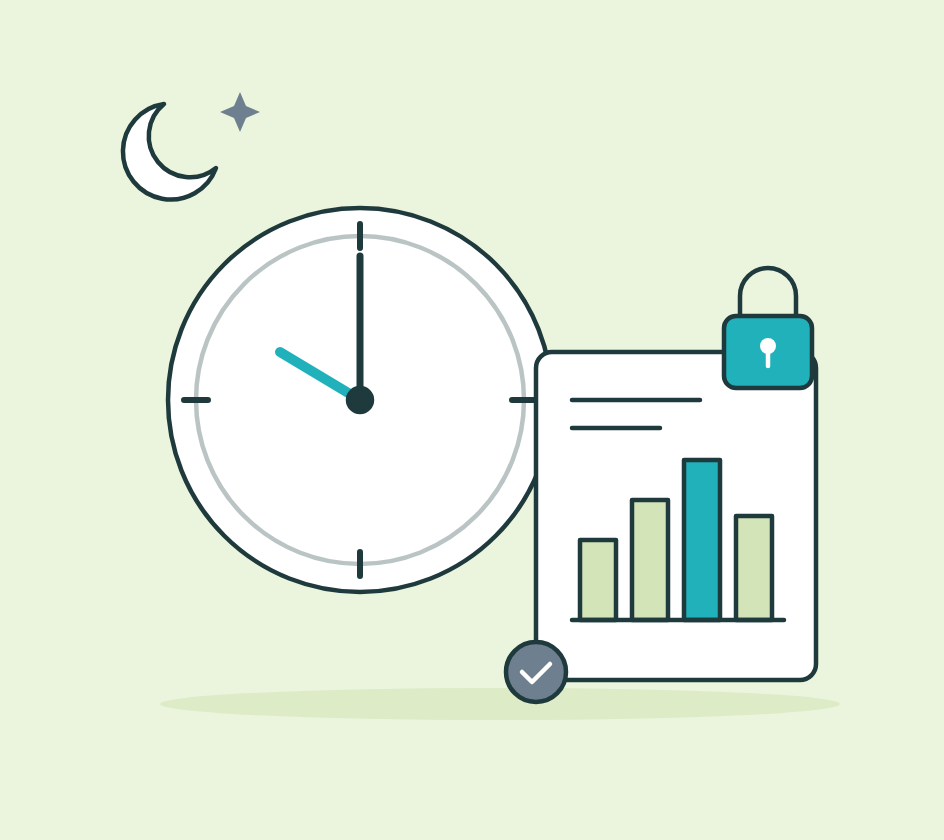
A figure released at ten shouldn't need someone awake at six
The problem
A statistic tied to a scheduled announcement carries a risk that has nothing to do with whether the number is right. It has to appear at the correct minute, not a minute before, because the announcement it supports has its own embargo and its own audience. Getting that timing right currently means a person watching a clock, ready to publish manually the moment the window opens, on a morning picked by the news cycle rather than by anyone's working hours.
The usual answer
Some agencies staff around it directly: someone comes in early or stays on standby, and the cost is a person's morning spent waiting for a publish button. Others build in a buffer, publishing a safe margin after the embargo lifts, which reduces the early-release risk and disappoints anyone expecting the figure exactly on schedule. A few have been caught by a version going live early because a draft was mistaken for the final, and now double-check everything by hand every time.
How we approach it
We schedule the release itself, behind an approval workflow with every version recorded. The figure is finalised and approved in advance, the publish time is set against the actual embargo, and the system holds it until that moment regardless of who is awake. Because every version is recorded, a correction needed after the fact has a clear record of what was published when and what changed.
What changes
The embargo holds itself. Nobody has to be awake at six for a ten o'clock release, and the team's morning goes into checking the numbers are right rather than watching the clock to make sure they go out on time.