
- BuildPadAI rapid application development for secure, tailored internal tools.
- Chocolate FactoryAgentic AI platform to observe, teach and configure your agents.
- Cloud PrimusOne control plane for AI and cloud, with cost control built in.
- SentryPageIntelligent website defacement monitoring that catches changes fast.
- VisorOne AI-powered CMS for every enterprise website you run.
Recognising returning hotel guests, consent intact
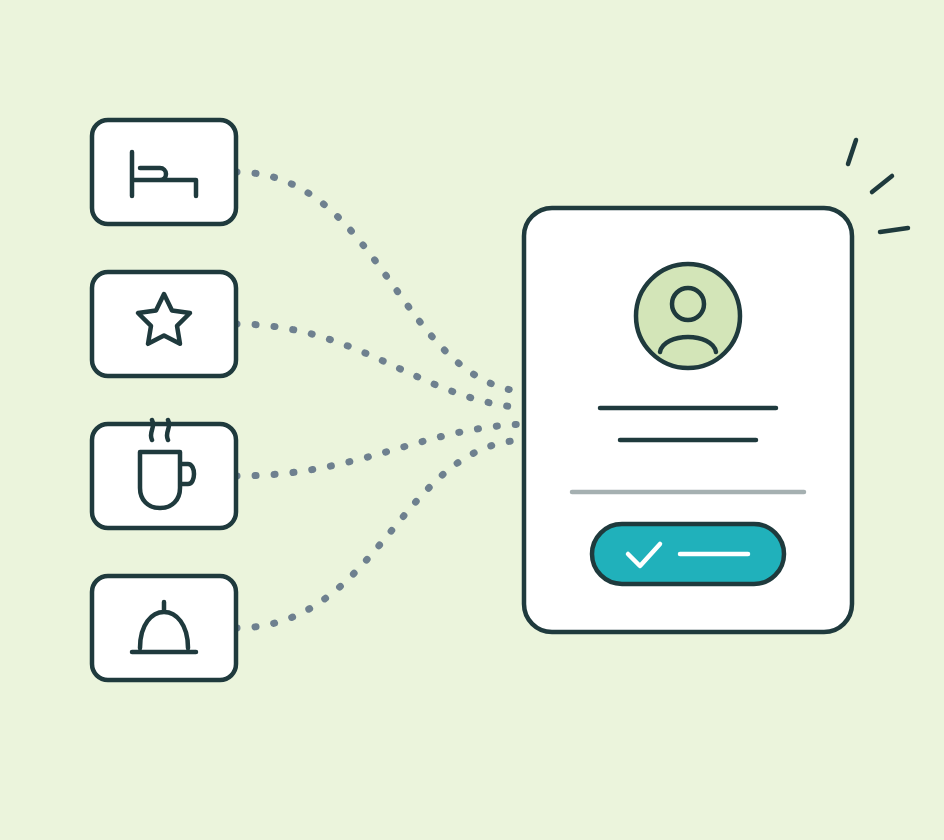
A guest is one person to the guest and four records to the group
The problem
A single guest exists as several partial records inside most hospitality groups: one in the booking system, one in the loyalty programme, one in food and beverage, one at the front desk. Each system knows its own slice, none holds the full picture, and the guest experiences that fragmentation directly, as a welcome-back message that does not reflect their actual history or an offer that ignores a stay made through a different channel.
The usual answer
Groups patch this manually where they can: a front desk agent who recognises a regular by memory rather than by system, a loyalty team that occasionally reconciles its list against the booking system by hand, and a marketing team sending the same generic message to everyone because building a genuinely personalised one would mean pulling data from four places that do not talk to each other. Consent, tracked separately in each of those four places, is anyone's guess in aggregate.
How we approach it
We consolidate guest data into one governed platform, with each guest's activity across booking, loyalty, F&B and the front desk resolving to a single record, and consent recorded against that same record rather than scattered across systems. Matching guests across systems never designed to agree on an identifier is the real engineering work here, and gets validated carefully before anything downstream, like a personalised offer, is allowed to rely on it.
What changes
Recognition at check-in reflects an actual history rather than a guess, and a returning guest is treated like one consistently across every touchpoint. The group's consent position is defensible because it is recorded in one place against one record, not reconstructed from four systems after the fact.