
- BuildPadAI rapid application development for secure, tailored internal tools.
- Chocolate FactoryAgentic AI platform to observe, teach and configure your agents.
- Cloud PrimusOne control plane for AI and cloud, with cost control built in.
- SentryPageIntelligent website defacement monitoring that catches changes fast.
- VisorOne AI-powered CMS for every enterprise website you run.
Solving Real Problems with AI
Building AI Skills Through Real Business Problems
The future of AI will not be shaped by technology alone. It will be shaped by people who know how to use technology to solve problems that matter.
That belief sits at the heart of HackPad. AI and digital skills are best developed not through isolated exercises, but through meaningful challenges that reflect real business needs. When learners are exposed to actual operational problems, they begin to understand not only how technology works, but why it matters.
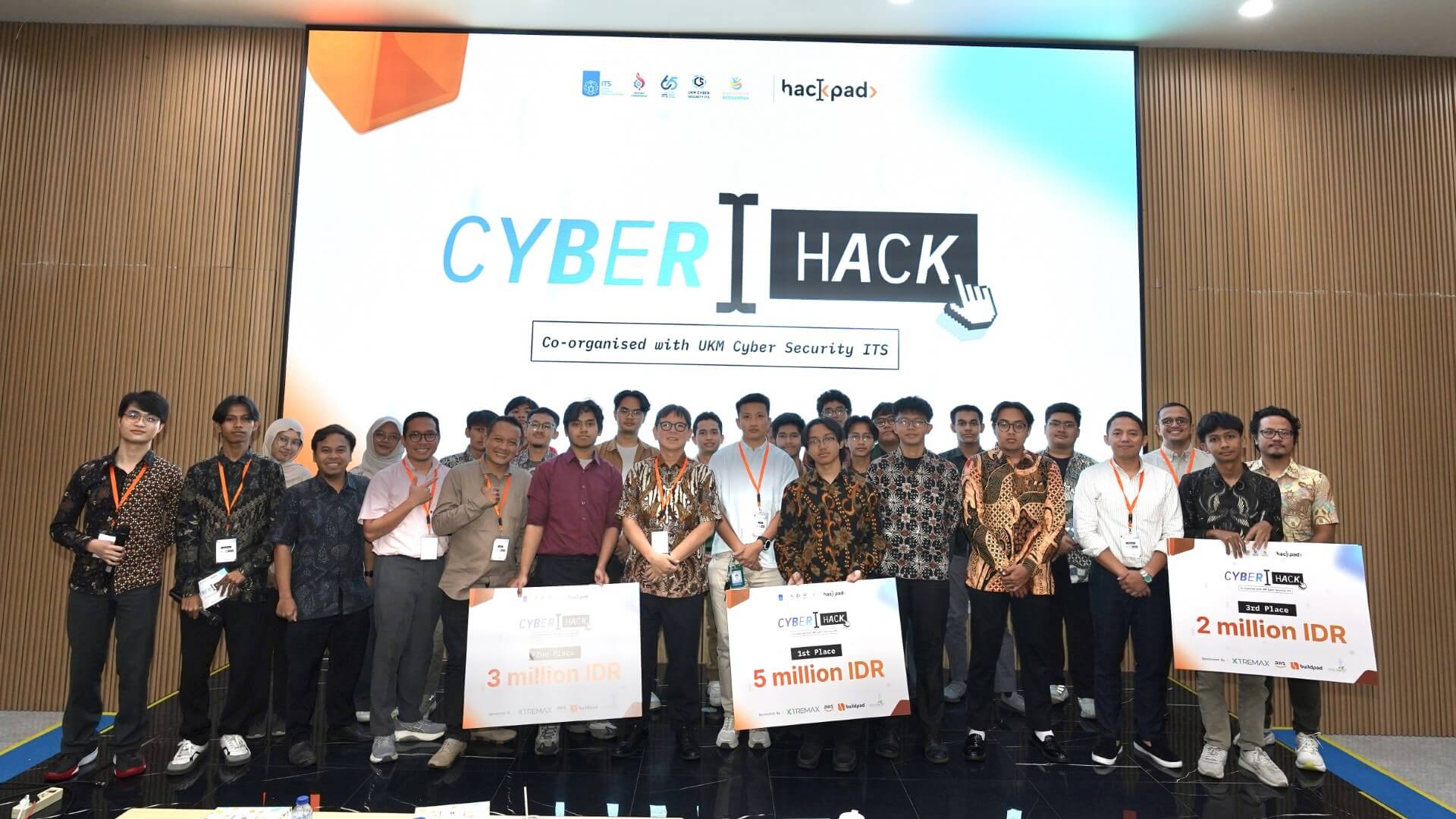
CyberHack 2026 brought this belief to life.
Where Industry and Academia Came Together
Organised by Xtremax Indonesia in collaboration with PT Indo Aneka Atsiri and Institut Teknologi Sepuluh Nopember (ITS), with support from Amazon Web Services (AWS) Indonesia, CyberHack 2026 challenged students to solve a real manufacturing problem faced by Sima Arome.
Under the theme "How Can AI and Technology Innovate Sima Arome's Manufacturing Process?", participants were not working on a fictional case study. They were asked to engage with real operational challenges and explore how AI, software engineering, and cloud technologies could improve manufacturing efficiency, optimise workflows, and support better data-driven decision-making.
This made CyberHack 2026 more than a competition. It became a practical learning environment where students could experience how digital solutions are built for real business impact.
BuildPad Helped Students Focus on What Truly Matters
CyberHack 2026 also marked an important realisation of the vision behind BuildPad.
In many digital projects, teams lose valuable time setting up infrastructure, configuring systems, and solving technical foundations before they can even begin addressing the actual business problem. BuildPad changes that.
Powered by AWS Cloud Services, BuildPad gave participants a ready foundation to build on. Instead of spending most of their time on setup, students could focus on understanding the problem, designing the right solution, testing their ideas, and improving their applications.
This closely reflected how modern enterprise teams should work. The goal was not simply to build quickly, but to build with clarity, structure, and purpose.
In fact, teams spent only 1 to 2 days on development. The majority of the program was dedicated to discovery, iteration, feedback, and refinement. This mirrored real-world product development, where the strongest solutions come from understanding the problem deeply before rushing into execution.
From Student Projects to Enterprise-Ready Outcomes
The results exceeded expectations.
Students delivered secure, scalable, and maintainable applications designed with enterprise standards in mind. These were not simple experimental prototypes. They were solutions shaped around real business needs, supported by strong technical foundations, and refined through industry feedback.
Each solution was evaluated by a panel representing industry, technology, and academia. This ensured that every project was assessed not only for technical quality, but also for business relevance, usability, and practical value.
CyberHack 2026 showed that with the right platform, methodology, and mentorship, emerging digital talent can produce solutions that align with real industry demands.
More Than a Hackathon
CyberHack 2026 was more than a hackathon. It was a model for how industry and academia can work together to build digital capability and prepare the next generation of technology talent.
A key objective of CyberHack was to help uplift Indonesia's IT talent by giving students the opportunity to work on real business challenges. Rather than building hypothetical projects, participants were exposed to real-world problems that required them to understand user needs, business context, and desired outcomes'experiences that are difficult to replicate in a classroom.
For students, the event created a bridge between academic learning and industry expectations. For industry, it demonstrated how young talent can contribute fresh ideas and practical solutions when equipped with the right tools and mentorship. For organisations, it showcased the value of combining AI-enabled platforms such as BuildPad, AWS Cloud, and hands-on guidance to accelerate innovation.
Most importantly, CyberHack reinforced a simple belief: the best way to learn technology is by solving problems that matter.
From Classroom Innovation to Enterprise Transformation
CyberHack 2026 also points to a bigger opportunity.
If students can build production-level applications using BuildPad, imagine what an entire workforce can achieve with the same approach.
The event showed how the right platform can unlock faster innovation, higher-quality solutions, and stronger business outcomes. By reducing technical barriers and helping teams focus on the problem, BuildPad enables people across different levels of technical expertise to contribute to digital transformation.
Through HackPad, this approach can move beyond the classroom and into organisations that are ready to modernise how they build, scale, and deliver digital solutions.
CyberHack 2026 was only the beginning. It showed what becomes possible when real business problems meet capable talent, structured guidance, and technology designed to help people build with confidence.
Featured in the News:
Ready to modernise how your organisation builds digital solutions?
Explore how BuildPad can help your teams move faster, build smarter, and deliver production-ready outcomes.
- WhatsApp Channel : https://whatsapp.com/channel/0029Vb8QZTAGufIvtznRyx0s
- LinkedIn Page : https://www.linkedin.com/showcase/buildpad-xtremax/
- Website : BuildPad - The Launchpad for Enterprise-Ready Apps