
- BuildPadAI rapid application development for secure, tailored internal tools.
- Chocolate FactoryAgentic AI platform to observe, teach and configure your agents.
- Cloud PrimusOne control plane for AI and cloud, with cost control built in.
- SentryPageIntelligent website defacement monitoring that catches changes fast.
- VisorOne AI-powered CMS for every enterprise website you run.
Budgets and alerts before the bill closes
Unpredictable spend gets discovered when the invoice arrives, which is too late to do anything about it
The problem
Cloud spend is committed continuously and reported monthly. That gap is the whole problem. A misconfigured autoscaling group, a data transfer pattern nobody modelled, a test environment left running after a project ended, a query scanning far more than it needs to. Any of these can run for three weeks before anyone sees a number, and by then the money is spent.
The usual answer
Provider-level budget alerts do not help much either, because they sit at the account level. Knowing the organisation is over budget does not tell anyone which team, which service or which environment caused it. The investigation that follows is the same manual work as the monthly reconciliation, run under time pressure, and it usually ends with a rough attribution that nobody fully trusts. Teams end up either padding their forecasts or being blamed for overruns they cannot see coming.
How we approach it
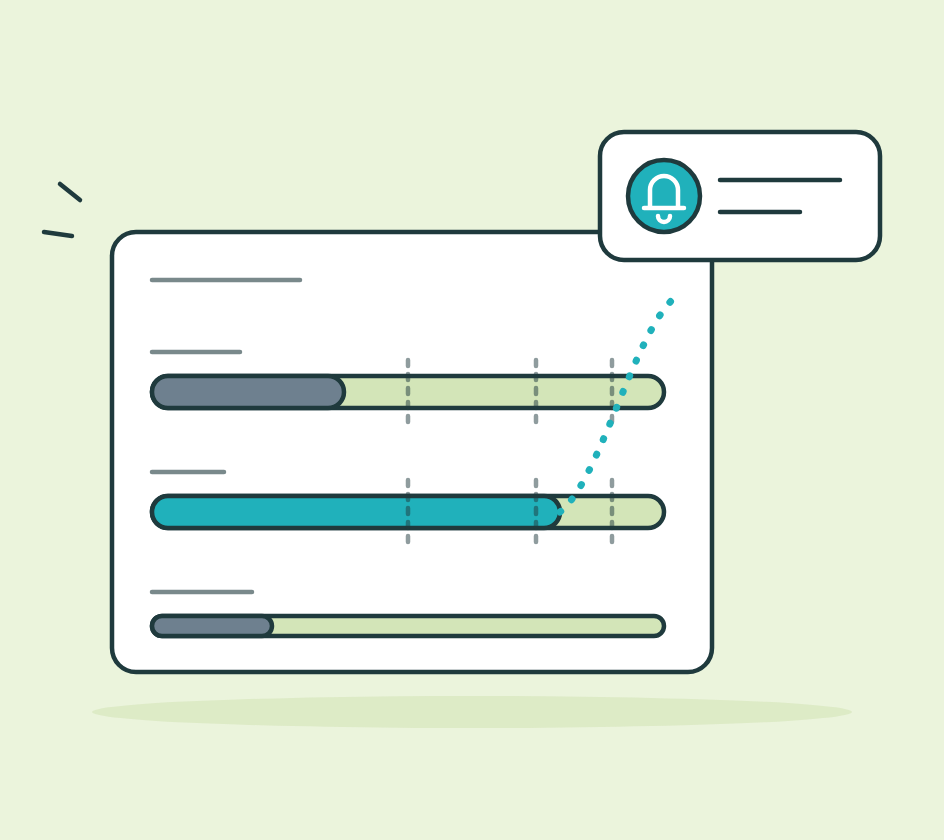
Nimbus Stream allocates budgets down to specific accounts, services and tags, and alerts at adjustable thresholds as the budget is consumed, at fifty, seventy-five and ninety per cent. Recipients are configured per budget, so the alert reaches the team that owns the spend rather than a central inbox that forwards it on.
What changes
Overruns surface mid-month while there is still something to be done about them. The owner of the spend hears about it first, which turns a finance conversation into an engineering fix. Forecasts get more accurate over time because the variance is visible as it happens rather than reconstructed after close.