
- BuildPadAI rapid application development for secure, tailored internal tools.
- Chocolate FactoryAgentic AI platform to observe, teach and configure your agents.
- Cloud PrimusOne control plane for AI and cloud, with cost control built in.
- SentryPageIntelligent website defacement monitoring that catches changes fast.
- VisorOne AI-powered CMS for every enterprise website you run.
Smarter Workforce Planning with AI
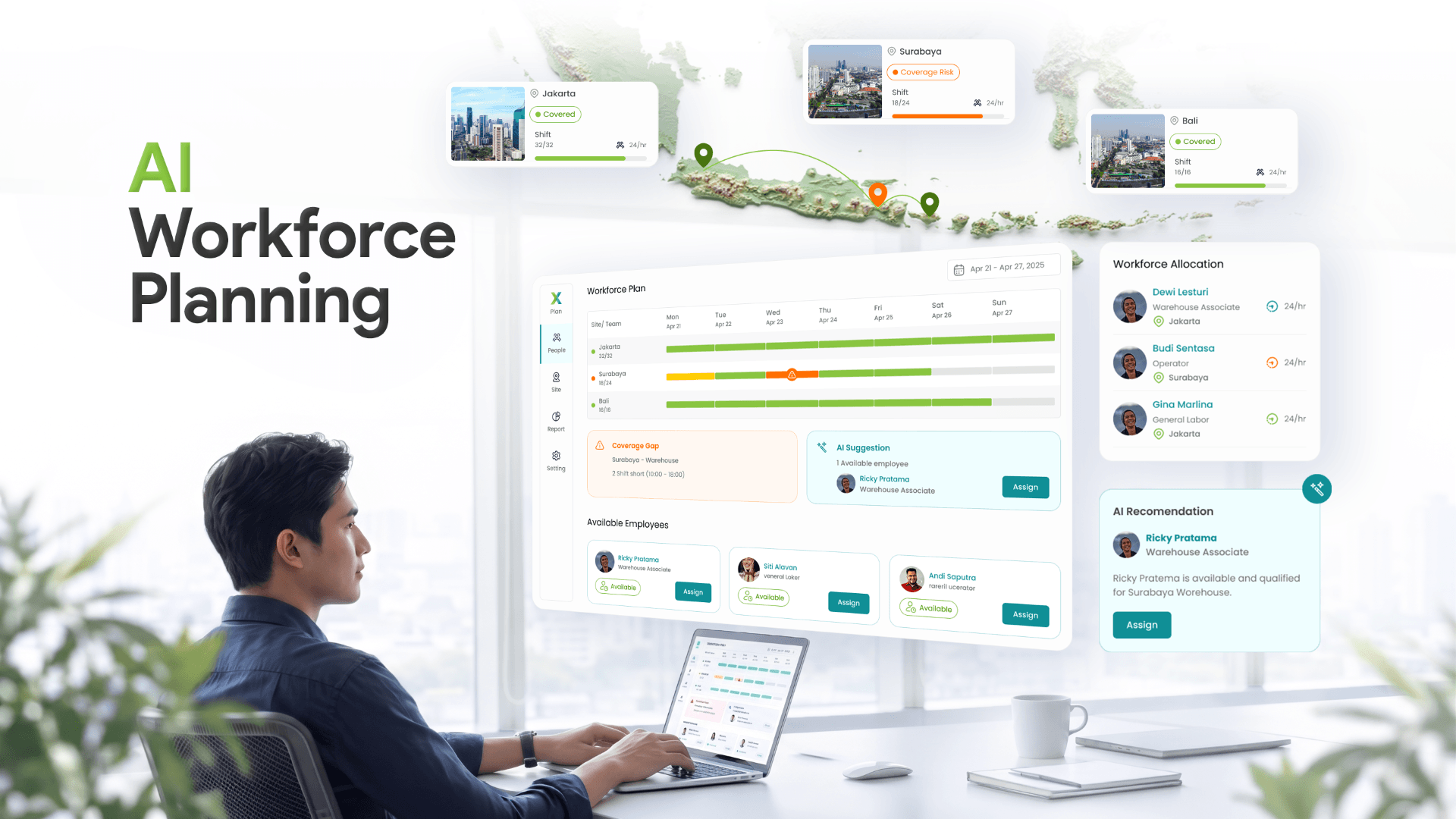
Running a workforce across multiple sites has never been more challenging.
Today's operations teams are expected to do more with less while managing staffing shortages, changing schedules, coverage gaps, compliance requirements, and rising service expectations. One unexpected absence, one last-minute request, or one surge in demand can quickly create a ripple effect across the entire operation.
And yet, many organisations are still trying to manage this complexity using spreadsheets, endless phone calls, chat messages, and manual coordination.
The reality is simple: workforce planning is no longer just about filling shifts. It's about ensuring the right people are in the right place at the right time, every single day.
The question is: can your current processes keep up?
The Hidden Cost of Reactive Workforce Planning
For organisations managing multiple locations, workforce planning often becomes a daily firefight.
Managers constantly ask questions like:
- Do we have enough people to cover every shift?
- Which sites are understaffed today?
- Are there scheduling conflicts across locations?
- Who can step in if someone calls in sick?
- Can we reassign resources without disrupting operations?
When the answers depend on manually checking spreadsheets, sending messages, and making countless calls, even a small change can consume hours of valuable time.
The bigger the operation becomes, the harder it is to maintain visibility and control.
And when workforce decisions are delayed, operational performance often feels the impact first.
From Scheduling People to Optimising Operations
This is where AI changes the game.
Instead of treating scheduling as a series of isolated decisions, AI brings together workforce availability, site requirements, business demand, staffing constraints, and operational priorities into a single intelligent planning process.
Suddenly, workforce planning becomes proactive rather than reactive.
Rather than asking, "How do we fill this shift?", organisations can start asking, "How do we optimise our workforce across the entire operation?"
The difference is significant.
AI doesn't just help create schedules faster. It helps organisations make smarter scheduling decisions.
Plan with Confidence, Not Guesswork
Creating effective schedules requires balancing countless moving parts.
Employee availability. Operational needs. Site-specific requirements. Skill sets. Existing assignments.
Trying to manually consider all these factors often leads to compromises and assumptions.
AI-assisted planning evaluates these variables simultaneously, helping managers identify the most practical workforce allocation based on real-world conditions.
The result?
Better decisions, fewer surprises, and schedules that are far more likely to work in practice, not just on paper.
Spot Coverage Risks Before They Become Problems
Most workforce issues aren't caused by a lack of data.
They're caused by seeing the problem too late.
Coverage gaps often become visible only when a shift is about to start or when service levels begin to slip.
By analysing workforce availability and operational demand, AI can surface potential shortages and scheduling conflicts much earlier.
This gives operations teams something invaluable:
Time.
Time to adjust. Time to reassign resources. Time to prevent disruptions before customers, employees, or stakeholders ever notice them.
Stay Agile When Plans Change
And they always do.
Employees call in sick. Demand spikes unexpectedly. A large project requires additional resources. Site priorities shift overnight.
Traditional workforce planning struggles when reality refuses to follow the schedule.
AI can help organisations adapt faster by identifying qualified replacements, suggesting resource reallocations, and highlighting the best available options in real time.
Instead of spending hours searching for solutions, managers can focus on making decisions.
When change is constant, speed becomes a competitive advantage.
Gain a Complete View of Your Workforce
You cannot optimise what you cannot see.
Many organisations still lack a single, accurate view of workforce activity across multiple sites.
Schedules live in one system. Attendance records live in another. Communications happen somewhere else entirely.
This fragmented view makes it difficult to understand what's really happening on the ground.
Centralised, AI-powered workforce planning changes that.
By bringing together schedules, assignments, attendance, workforce movements, and operational activities, leaders gain a real-time picture of workforce readiness across the organisation.
No more blind spots. No more guesswork. No more managing in the dark.
Spend Less Time Coordinating and More Time Leading
Ask any operations manager where their time goes.
It's rarely spent on strategy.
Instead, it's spent updating schedules, chasing confirmations, checking availability, responding to changes, and reconciling multiple systems.
These tasks are necessary, but they don't create value.
AI helps eliminate much of this administrative burden by streamlining workforce planning into a more structured and connected process.
That means less time managing spreadsheets and more time improving performance, supporting employees, and delivering better outcomes.
Scale Without Adding Complexity
Growth should create opportunities, not operational headaches.
Yet every new site, employee, and shift adds another layer of scheduling complexity.
Without the right technology, organisations often end up hiring more coordinators just to keep pace with workforce administration.
AI offers a different path.
By enabling intelligent workforce allocation, faster decision-making, and centralised oversight, organisations can scale operations without scaling complexity at the same rate.
Designed for Workforce-Intensive Industries
AI for Workforce Planning delivers value wherever people, shifts, and operational coverage are critical.
This includes:
- Facilities Management
- Security Services
- Field Services
- Maintenance Operations
- Healthcare
- Hospitality
- Retail
- Logistics
- Events & Venue Operations
- Recreation & Leisure
- Property Management
While every industry operates differently, the challenge remains remarkably similar:
How do you align workforce capacity with operational demand while maintaining visibility, flexibility, and control?
Turn Workforce Complexity into Competitive Advantage
The most successful organisations no longer view workforce planning as an administrative task.
They see it as a strategic capability.
AI helps organisations anticipate staffing issues before they happen, allocate resources more effectively, respond faster to change, and make decisions with greater confidence.
The outcome goes beyond scheduling efficiency.
It creates stronger operational readiness, better workforce utilisation, improved service delivery, and a more resilient organisation.
In a world where every shift matters, workforce planning can no longer depend on reactive processes and manual coordination.
The Real Question Is...
How many staffing issues, uncovered shifts, missed opportunities, and operational disruptions are hiding inside your workforce planning process today?
Your competitors are already using AI to predict demand, optimise staffing, and make faster workforce decisions.
Will your organisation continue reacting to workforce challenges? Or start getting ahead of them?
Ready to see what intelligent workforce planning looks like?
Book a demo today and discover how AI can transform workforce complexity into operational certainty, before your next scheduling gap becomes your next business risk.